Biosecurity scenario: Spyware on smartphone by foreign app
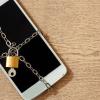
Nowadays (almost) every employee has a smartphone in their pocket. But have you ever thought about who could potentially have access to the information on your smartphone?
 Rijksinstituut voor Volksgezondheid en Milieu
Ministerie van Volksgezondheid,
Rijksinstituut voor Volksgezondheid en Milieu
Ministerie van Volksgezondheid,Nowadays (almost) every employee has a smartphone in their pocket. But have you ever thought about who could potentially have access to the information on your smartphone?
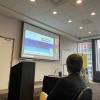
The Biosecurity Office regularly attends meetings at home and abroad with the aim of sharing knowledge, acquiring knowledge and networking.
We recently contributed to an article describing the incidence of potentially bioterrorist agents in the Netherlands. Almost all reported illnesses were linked to a travel history.
Last year, the Biosecurity Office developed the 'Dual-Use Quickscan'. This new online tool has been available in Dutch and English since the spring.
Here we present another current scenario with regard to biosecurity. This time it is a scenario about cyber attacks.
Before the corona crisis, the Biosecurity Office regularly attended meetings abroad with the aim of sharing knowledge, gaining knowledge and networking.

The World Health Organization (WHO) published a report in October containing the findings of an international horizon scan on dual-use research of concern (DURC) in the life sciences.
It was exciting until the last minute whether it could go ahead, but we are happy that we can look back on a successful Knowledge Day.
In October, Rik Bleijs was elected co-chair of the steering committee of the International Experts Groups of Biosafety and Biosecurity Regulators (IEGBBR).
Here we present another current scenario with regard to biosecurity. This time the scenario is based on a recently published article about orphan material.